Charitable receipt rules: what to keep for each gift
The IRS documentation rules depend on the size and type of the gift. This table summarises IRS Topic no. 506.
| Gift | What to keep |
|---|---|
| Any cash gift | A bank record, or a written communication from the charity with its name, the date and the amount. |
| $250 or more (cash or property), one contribution | A contemporaneous written acknowledgment from the charity: the amount (or a description of the property) and whether you got goods or services back, with a good-faith estimate of their value. |
| Got something back (dinner, ticket) | You can deduct only the amount above the value of what you received. |
| Noncash deduction over $500 | Form 8283, Section A. |
| Over $5,000 per item or group of similar items | A qualified appraisal and Form 8283, Section B. |
| Vehicles, inventory, securities | Special rules – see IRS Publication 526. |
Let the spreadsheet check it for you
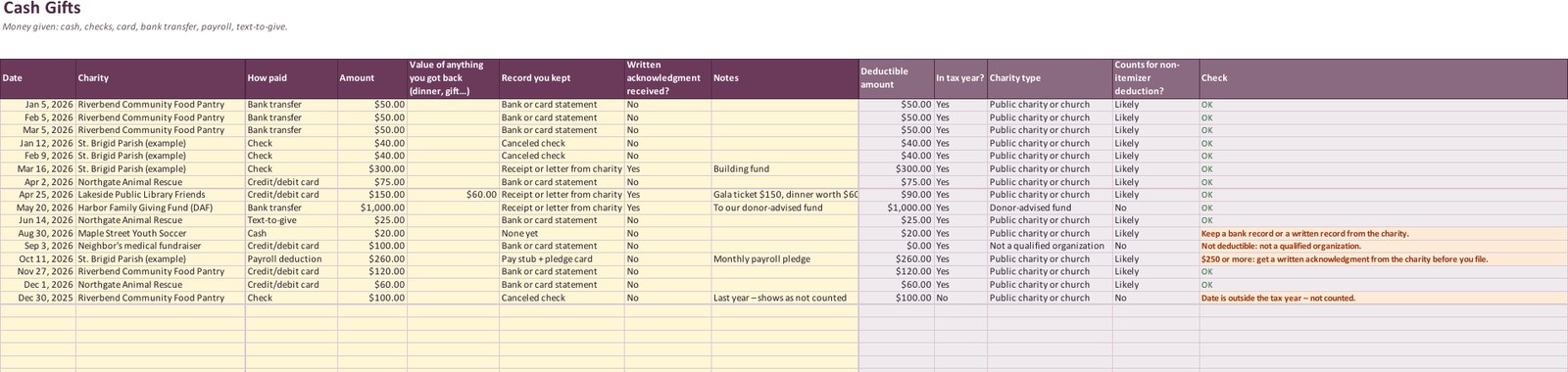
Every row in the Charitable Deduction Tracker has a Check column. It reads the amount, the record you kept and whether you have the charity's letter, and tells you what is missing – for example "$250 or more: get a written acknowledgment from the charity before you file". The Summary counts what is still open.
$9
One-time · Excel .xlsx · Blank + Sample workbook + READ-ME PDF
Digital download. Polar emails your link right after purchase. Refunds within 14 days – reply to the receipt.
Questions
When do I need a letter from the charity?
For any single contribution of $250 or more, cash or property, you need a contemporaneous written acknowledgment (IRS Topic 506).
When do I need Form 8283?
When your deduction for noncash contributions is more than $500. Over $5,000 per item or group of similar items needs a qualified appraisal and Section B.
Is a bank statement enough for small cash gifts?
For cash gifts under $250, a bank record or a written communication from the charity showing its name, the date and the amount is required.